
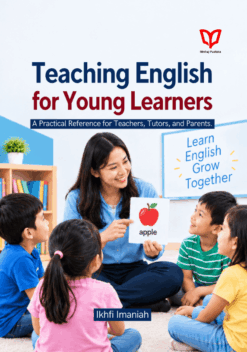
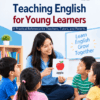
 Teaching English for Young Learners: A Practical Reference for Teachers, Tutors, and Parents

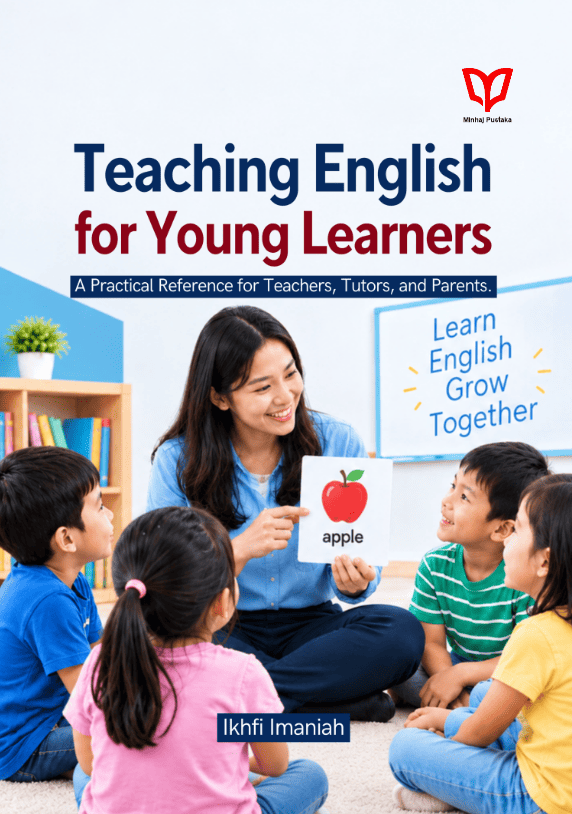
Teaching English for Young Learners: A Practical Reference for Teachers, Tutors, and Parents
Harga aslinya adalah: Rp160.800.Rp120.600Harga saat ini adalah: Rp120.600.
Penulis: Ikhfi Imaniah; Editor: Lukmanul Hakim
ISBN: proses
Ukuran : UNESCO (15,5 x 23 cm)
Halaman : xii, 250
Tahun Terbit : 2026
The book has five parts that move from theory to practice. Part I covers the foundations: how child and adult language acquisition differ, the stages of child development, and the main learning theories and styles. Part II explains how to build a language-rich learning environment. It also covers developing listening, speaking, reading, and writing, and teaching grammar and vocabulary. Part III focuses on classroom practice. It looks at teaching through stories, games, and songs, classroom management, assessment, and lesson planning. Part IV addresses contemporary issues: technology, artificial intelligence, social media, and twenty-first-century skills. Part V offers a ready-to-use toolkit of sample lesson plans, worksheets, reflection tasks, and routes for professional development.
Each chapter opens with a short overview of what it covers. It moves from principles to practice and closes with a summary, reflection questions, and further reading. Activities appear in boxes that can be lifted straight into a lesson. The appendices include a quick-reference guide and a glossary.
Two companion resources support the book. The TEYL Activity Handbook contains 45 classroom activities, 24 games, 11 flashcard sets, 12 teacher tasks, and three sample lessons. The TEYL Printable Pack provides print-ready flashcards, matching sheets, bingo boards, an adventure game board with a dice and spinner, and worksheets.
The book treats age as a guide rather than a rule and refers to CEFR levels. Its aim is to help every adult who works with children offer knowledgeable, creative, and reflective support, so that children’s first experiences of English are meaningful and enjoyable.
| Berat | 350 gram |
|---|---|
| Dimensi | 15 × 21 × 1 cm |
Jadilah yang pertama memberikan ulasan “Teaching English for Young Learners: A Practical Reference for Teachers, Tutors, and Parents”
Anda harus login untuk mengirimkan ulasan.
Produk Terkait


Segera Terbit



Pendidikan
Ulasan
Belum ada ulasan.