
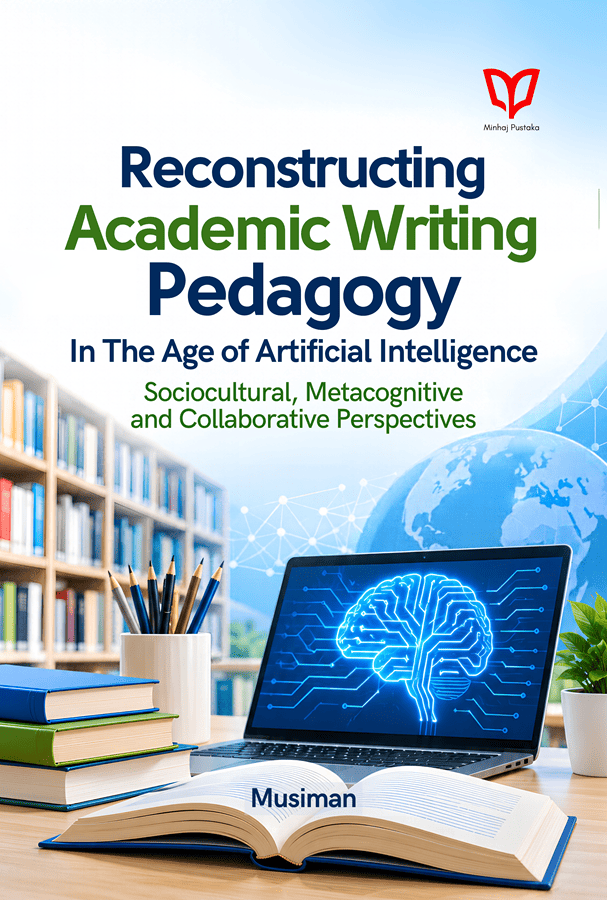
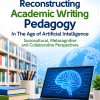
Reconstructing Academic Writing Pedagogy in The Age of Artificial Intelligence: Sociocultural, Metacognitive, and Collaborative Perspectives
Harga aslinya adalah: Rp168.800.Rp126.600Harga saat ini adalah: Rp126.600.
Penulis: Musiman; Editor: Lukmanul Hakim
ISBN: proses
Ukuran : UNESCO (15,5 x 23 cm)
Halaman : xviii + 264
Tahun Terbit : 2026
When AI can generate fluent academic prose in seconds, what should students still learn to do for themselves?
Reconstructing Academic Writing Pedagogy in the Age of Artificial Intelligence confronts a central challenge in higher education: better-looking texts do not necessarily mean better writers. Moving beyond the debate between embracing and banning AI, this scholarly reference book asks how technology can support—not replace—the intellectual work of writing.
Drawing on sociocultural theory, metacognition, and collaborative writing research, the book explores how students learn through dialogue, evaluate feedback, negotiate ideas, and take responsibility for their claims. Its emphasis on English as a foreign language (EFL) writing offers particular relevance to educators working with multilingual learners, while opening up questions for university teaching more broadly.
Across fourteen chapters, readers will find a critical account of writing pedagogy, research on AI-assisted academic writing, and practical guidance on task design, reflective journals, revision records, assessment, authorship, and institutional responsibility. Classroom illustrations show how students can question AI suggestions, verify sources, explain revisions, and collaborate with peers.
At its heart is the Human–AI Mediated Writing Ecology (HAMWE), a proposed conceptual framework connecting writers, teachers, peers, tasks, AI tools, and institutional conditions. Rather than offering a proven, one-size-fits-all solution, HAMWE provides a way to think more carefully about pedagogical choices.
Written for lecturers, researchers, teacher educators, postgraduate students, and academic leaders, this book offers a timely and constructive perspective on teaching writing in the AI era—keeping human judgment, meaningful learning, and scholarly responsibility at its center.
| Berat | 350 gram |
|---|---|
| Dimensi | 15 × 21 × 1 cm |
Jadilah yang pertama memberikan ulasan “Reconstructing Academic Writing Pedagogy in The Age of Artificial Intelligence: Sociocultural, Metacognitive, and Collaborative Perspectives”
Anda harus login untuk mengirimkan ulasan.
Produk Terkait

Agama Islam
Segera Terbit
Ulasan
Belum ada ulasan.